Showing posts with label Dr. Jason Scalise. Show all posts

Friday, March 29, 2013

Part 2: Following AZOPT’s Client through Total Shoulder Replacement Surgery


Part 2: Following AZOPT’s Client through Total Shoulder Replacement Surgery


In the 1950’s, shoulder replacement surgery was first performed to treat severe shoulder fractures.  Through the years, shoulder replacement surgery has been used to treat many other painful conditions in the shoulder, like arthritis.  Today, according to the Agency for Healthcare Research and Quality, approximately 53,000 people in the U.S. have shoulder replacement surgery each year.  Compared to more than 900,000 Americans who have knee and hip replacement surgery each year, shoulder replacement surgery is not as common, but still just as successful at relieving joint pain.  Just ask AZOPT patient Mr. A.

When we last left AZOPT client Mr. A, he was preparing for total shoulder replacement surgery on his left shoulder on January 10, 2013 following successful shoulder replacement surgery on his right shoulder April 26, 2012.  In fact, the success of rehabilitation on his right shoulder led him to the decision to have the surgery on the left shoulder.  The surgery of his left shoulder was performed by Dr. Jason Scalise, TheCore Institute, at Banner Thunderbird Hospital.  AZOPT’s Doug Lehman, PT, watched the entire surgery over the shoulder of Dr. Scalise.

Mr. A’s total shoulder replacement involved replacing the arthritic joint surfaces with a highly polished metal ball attached to a stem, and a plastic socket.  This was “press fit” into the bone.  To do this, Dr. Scalise saws off the humeral head (ball) and reams out the glenoid fossa (socket).  He then drills a hole into the remaining humerus bone and fits the stem of the prosthetic into the hole.  The plastic socket is screwed into what remains of the glenoid fossa.  The ball is then put back together with the socket, the range of motion is checked, and if all of the movement and alignment is positive, the incisions are sewed up and Mr. A is on his way to recovery.  The entire surgery from wheeling in to wheeling out was approximately three hours, with half of that being actual surgery time.

For the first two weeks following surgery, Mr. A kept his arm in a sling.  He performed basic exercises for the hand, wrist, and elbow along with pendulum exercises for the shoulder.  With his elbows in, Mr. A was asked to simply turn his hands from palm up to palm down, touch his fingers, and straighten then bend his elbow.  Additionally, the pendulum exercises involved allowing the surgical arm to hang loosely in a bent over position, swinging the arm gently front to back, and in circles.
01/25/2013

On January 25, 2013, two weeks after the surgery, Mr. A came to AZOPT for his initial evaluation.  Doug recorded the following active range of motion measurements:


Right
Left (prior to surgery
Left (initial evaluation)
Flexion
140
150
92
Abduction
120
111
80
External Rotation
75
72

Internal Rotation
72
60


01/25/2013
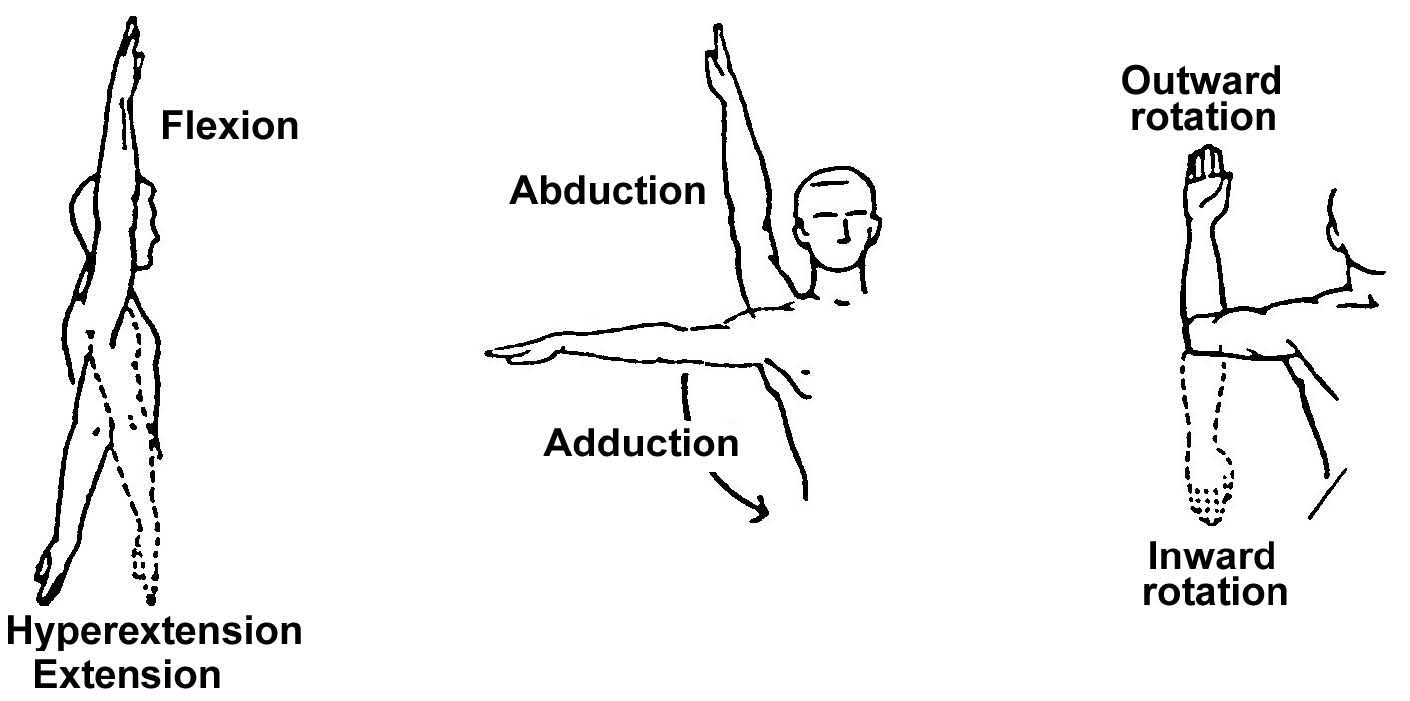
Active range of motion means Mr. A performs these motions by himself.  Flexion is the range of motion (ROM) measurement from lifting your arm straight forward from your hip to above your head.  Abduction is the ROM measurement from lifting your arm straight from your hip out to the side and above your head.  External rotation is the ROM measurement with your elbow at 90 degree, rotating your hand outward.  Internal rotation is the ROM measurement with your elbow at 90 degrees, rotating your hand inward.  These measurements translate directly to functional activities – washing your hair, tucking in your shirt in the back, putting away dishes in the cupboard.  Generally speaking, a healthy range of motion would be 160 degrees flexion and abduction, and 90 degrees external and internal, although this does vary person to person.

Doug tells us “by observing the surgery, I was able to see the actual structures, how they were cut and reattached, and how the prosthetic pieces were attached.  Dr. Scalise guided me through the specific techniques and we discussed his rehabilitation expectations.  By learning the process and the range of motion available while Mr. A was under anesthesia, I am more comfortable aggressively obtaining range of motion and active movement early in the rehabilitation process.”

Mr. A attends physical therapy at AZOPT three times weekly.  In the first 3 weeks of physical therapy, Mr. A’s physical therapy program consisted of manual therapy focusing on improving range of motion with a slow progression of exercises and activities to regain strength and stability as his pain tolerance allowed.  According to Doug, Mr. A has responded extremely well to therapy.  Mr. A tells us his progress on his left shoulder has been quicker than his right shoulder.  With the factor of the unknown removed, Mr. A is familiar with the process and comfortable with what he needs to do to recover quickly. 

02/15/2013
On February 15, 2013, after ten physical therapy visits, Doug recorded the following active range of motion measurements:

Right
Left (prior to surgery
Left (i.e.)
Left (02/15)
Flexion
140
150
92
135
Abduction
120
111
80
97
External Rotation
75
72

60
Internal Rotation
72
60

40

02/15/2013
A large factor to Mr. A’s recovery is his compliance with the Home Exercise Program prescribed during physical therapy.  This program ultimately gives him the greatest chance at success.  Mr. A has a pulley at home that helps with his range of motion and strength.  He also uses a golf club at home to do shoulder extensions and shoulder raises.  Furthermore, Mr. A guides a rolled up towel up and down a wall.  It is extremely important for anyone recovering from any injury to keep up with the Home Exercise Program.  Without it, physical therapy will stall and set the patient back.
 
With the addition of the Home Exercise Program, physical therapy visits continued to include progressions of manual therapy and therapeutic exercises to decrease pain and increase range of motion, strength, and stability.  After 21 visits, on March 13, 2013, Mr. A reported an overall improvement of 75% compared to his normal function.  He was still experiencing pain with activities and a decreased ability to complete normal activities of daily life that require the use of the left arm.  On this day, Doug recorded the following active range of motion measurements:
 

Right
Left (prior to surgery
Left
(i.e.)
Left
(02/15)
Left
(03/13)
Flexion
140
150
92
135
140
Abduction
120
111
80
97
90
External Rotation
75
72

60
67
Internal Rotation
72
60

40
62

Mr. A will continue physical therapy three times per week at this time.  He actually loves coming to AZOPT because he knows this is making him better.  While Mr. A cannot accomplish all of his goals, he realizes he is much closer.  He still cannot lift a mug of coffee, but he is able to drive again.  He also no longer experiences clicking or pain when brushing his hair.  His biggest fear before surgery was the idea of a “frozen arm” – that every time you move the arm, there’s pain, so you just don’t move it.  Through two total shoulder replacement surgeries and rehabilitation at AZOPT, Mr. A no longer has “frozen arm,” and is 75% closer to returning to normal function with no pain.

Check back with us for the third, and final, installment of Mr. A’s recovery, when Mr. A is discharged from physical therapy.

Wednesday, January 16, 2013

Follow AZOPT's Client Mr. A Through Total Shoulder Replacement Surgery

Following AZOPT's Client Through Total Shoulder Replacement Surgery - Entry #1
January 16, 2013
  
Shoulder_Anatomy
The Core Institute
The shoulder is the most mobile joint in the body. It plays a major role in positioning your arm and hand through space. Most of us take for granted our shoulder movements throughout a normal day’s activities. Think about all of the activities that require lifting your arm – washing your hair, brushing your teeth, drinking a cup of coffee or water, driving a car, carrying groceries – the list can go on. That’s not to mention an active lifestyle that includes golf, pickle ball, or any other type of exercise. 

But what happens when the pain is so bad that the simplest daily activities cause the most severe pain? What happens when you can’t even wash your own back, or worse, clean up after using the toilet? This was the life of AZOPT client, Mr. A. Mr. A was faced with a choice – live with a shoulder overloaded with arthritis that caused pain in every movement or have total shoulder replacement surgery. 

This blog series, which we will update every 2 to 4 weeks, will follow Mr. A through his rehabilitation from total shoulder arthroplasty (TSA) of his left arm, and provide an accurate account of Mr. A's experiences. Interestingly, Mr. A came to Arizona Orthopedic Physical Therapy following TSA of his right shoulder. A natural left hander, Mr. A decided after successful rehab on his right shoulder to move forward with TSA of his left shoulder. His knowledge and experiences after having TSA on one shoulder will give us more perspective as he rehabs the other shoulder. 

-------------------------------------------------------

Surgery is always a last option, only to be considered after non-surgical treatments such as physical therapy and activity modification fail to provide sufficient relief. The clear path for Mr. A was TSA on his right shoulder in April, 2012. After at least ten years of worsening pain forced him to need help getting up and down out of bed and in and out of a chair, the ‘straw that broke the camel’s back’ was during a theatre production of Smokey Joe’s Café. Extensive choreography required the actors to raise their arms above their heads during various scenes. Mr. A was already limited driving his car and helping his wife around the house with cleaning and heavy lifting, but now he was being scolded by the director for not performing the choreography accurately, a move that Mr. A could not physically accomplish. 

Mr A, 73 years young, was an active young man. He is a retired auto worker who used to lift weights, golf, and swim. In his own words, “I am not a sit around type of guy, but my shoulders have forced me into this kind of lifestyle.” His main goal through both surgeries is to eliminate pain and increase his range of motion and functional strength allowing him to return to all activities without restrictions. Prior to his first surgery, he had full functional use of his shoulder, but did have decreased range of motion, decreased strength, and increased pain with activity. 

According to The Core Institute, “shoulder replacement surgery essentially involves replacement of the worn out joint surfaces. There are several shoulder replacement implant types which are designed to address different patient needs, anatomy, and arthritis type. Also, there are a myriad of factors that your surgeon will weigh in order to select the correct type of replacement which is best for your shoulder. What works well for one patient may not be the best choice for your shoulder.” (The Core Institute. Total Shoulder Replacement Surgery. Retrieved from http://www.thecoreinstitute.com/total-shoulder-replacement-surgery.html).

AZOPT did not begin working with Mr. A until after his right shoulder TSA. Therefore, we can only provide pre-surgery measurements of his left shoulder and post-surgery measurements of his right shoulder. Mr. A first arrived at AZOPT May 10, 2012, following his first surgery April 26, 2012. 

His range of motion measurements were as follows: 


Left
Right
Flexion
150°

60° with pain
Abduction
111°

External Rotation
72°

Internal Rotation
60°


After 5 months (or 59 visits) of physical therapy, Mr. A’s range of motion measurements were as follows: 


Left
Right
Flexion
150°
142°
Abduction
111°
120°
External Rotation
72°
73°
Internal Rotation
60°
65°


http://www.nursing411.com
Flexion is the range of motion (ROM) measurement from lifting your arm straight forward from your hip to above your head. Abduction is the ROM measurement from lifting your arm straight from your hip out to the side and above your head. External rotation is the ROM measurement with your elbow at 90 degree, rotating your hand outward. Internal rotation is the ROM measurement with your elbow at 90 degrees, rotating your hand inward. These measurements translate directly to functional activities – washing your hair, tucking in your shirt in the back, putting away dishes in the cupboard. Generally speaking, a healthy range of motion would be 160 degrees flexion, 170 degrees abduction, and 90 degrees external and internal, although this does vary person to person. 

On September 28, 2012, Mr. A was discharged, knowing he would be having TSRS on his left shoulder, and would be back in physical therapy to rehabilitate both shoulders following surgery. Prior to his second surgery, Mr. A stated his left shoulder currently had pain levels at a 7 out of 10, with 0 being no pain and 10 being the highest amount of pain. He felt his right shoulder was approximately 80% rehabilitated. His sleep patterns cause him the most pain, as he changes sides constantly throughout his sleep, waking up two to three times each night. 

Mr. A had TSA surgery on his left shoulder on Thursday, January 10. Surgery was done by Dr. Jason Scalise, from The Core Institute. AZOPT Physical Therapist Doug Lehman, PT, who will be Mr. A’s therapist, watched the entire surgery over the shoulder of Dr. Scalise. Check out the next entry, which will discuss the surgery, the immediate care following the surgery, and the rehabilitation plan moving forward. 

We would like to hear from you: 
  1. What would you like to know about this procedure and the rehabilitation process? 
  2. Which of your daily activities are you experiencing pain? 
  3. How is pain affecting what you would like to accomplish in your day?